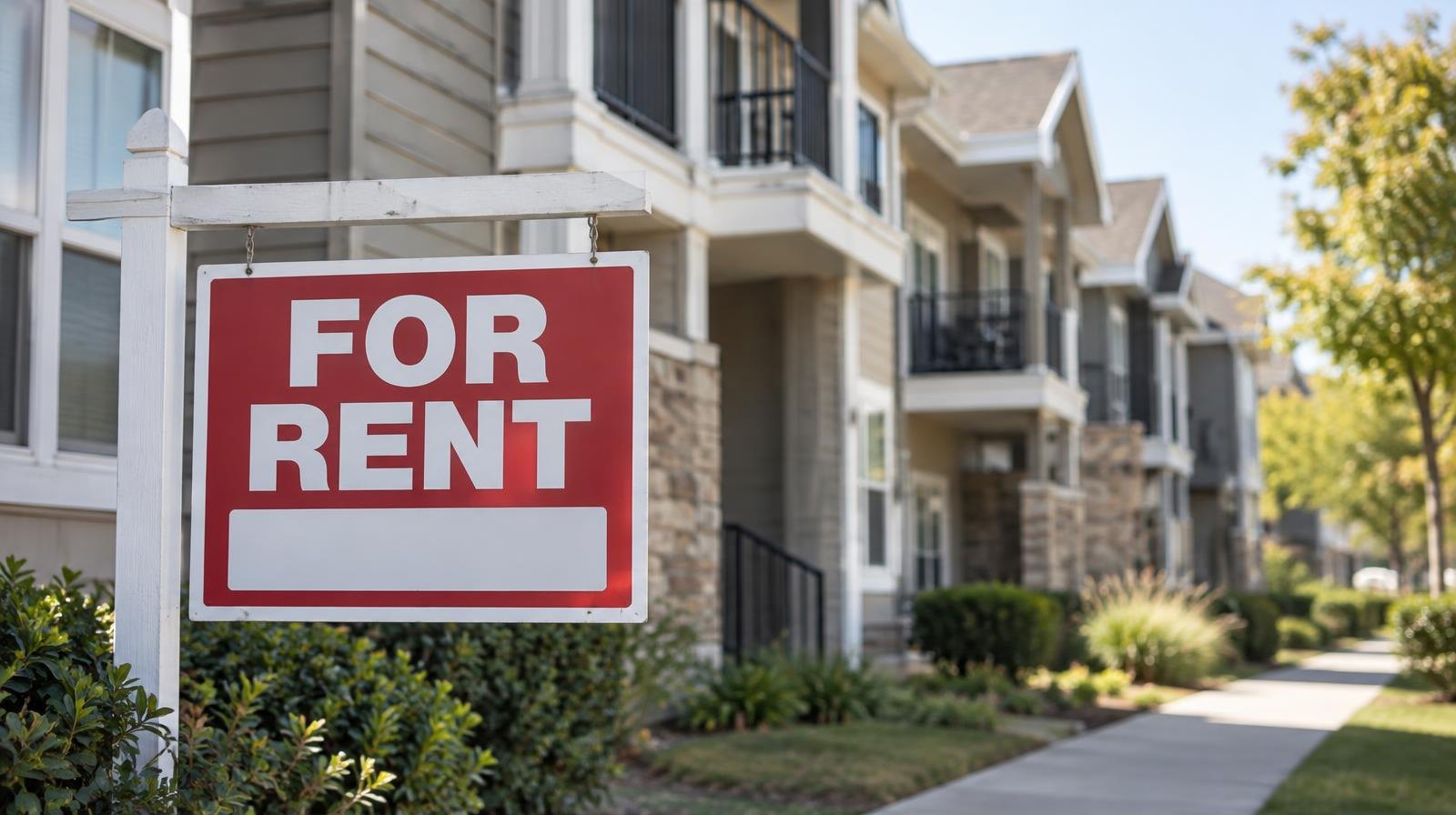
Most renters across North Texas spend at least 30% of their income on housing, a new survey covering Collin County shows.
The University of Texas at Dallas released results from its 2026 William C. Short Quality of Life Survey on Oct. 21, drawing on 1,933 responses collected in August from residents in Collin, Dallas, Denton and Tarrant counties. The annual survey is part of the North Texas Quality of Life Initiative, a project of the university's School of Economic, Political and Policy Sciences.
Regionwide, 62% of renters reported spending at least 30% of their monthly income on rent, according to The Dallas Morning News. That threshold is the standard definition of being "housing-burdened." More than half of respondents, 53%, said they "sometimes or often" ran out of purchased food without money for more, The Dallas Morning News reported.
The numbers are stark.
Respondents identified inflation, prices and housing affordability as the most important issues facing their communities, according to Community Impact.
Despite those pressures, 76% of respondents said they were satisfied with where they live. Timothy Bray, project director for the North Texas Quality of Life Initiative and director of the Institute for Urban Policy Research at UT Dallas, said the survey paints a region people value but one under strain.
"Growth and employment [data], these federal numbers that come out, they tell a story, but they don't always tell the whole story," Bray said, according to Community Impact. "They can't fully capture everyday security."
The survey did not break out food insecurity or housing-burden rates by individual county. But Collin County stood out on another measure: traffic.
Nearly half of Collin County respondents, 49.7%, identified traffic as one of their community's three worst features, the highest rate among the four counties, according to a separate Dallas Morning News report.
Another 26.2% of Collin County respondents called transportation services a weakness, compared with just 5.1% who called them a strength.
Bray noted there is "no single North Texas experience," as responses differed by county, race and generation, Community Impact reported.
Disconnection and civic doubt
A growing share of respondents said they are "not at all" committed to their neighborhood, Bray said.
Only 17% felt they had a high influence on local government, even though close to three-quarters agreed voting is a civic duty.
The survey also asked about artificial intelligence. Fifty-seven percent of respondents said they felt uneasy or afraid about increasing AI use, while 32% called themselves hopeful or enthusiastic.
Millennials were the least enthusiastic generation, Bray said.
Respondents wanted more AI in weather forecasting, scientific discovery and healthcare but less in counseling, relationship advice and spiritual guidance, according to Community Impact.
What comes next
All Community Outreach, an Allen-based nonprofit, provides food assistance and short-term financial help for housing and utilities to Collin County residents facing the kinds of pressures the survey describes.
Jennifer Holmes, dean of the School of Economic, Political and Policy Sciences, said the initiative aims to position UT Dallas as "a neutral convener at the table where North Texas makes its decisions, hopefully with good data," according to The Dallas Morning News.
The survey team plans to launch a 2027 survey in May, with findings feeding into a first-ever State of North Texas Forum in September.